Industrial Metaverse Platform
Bridging the physical and digital to redefine industrial future
Product Details
Industrial Metaverse Platform: Bridging Virtual and Physical to Reshape the Future of Industry
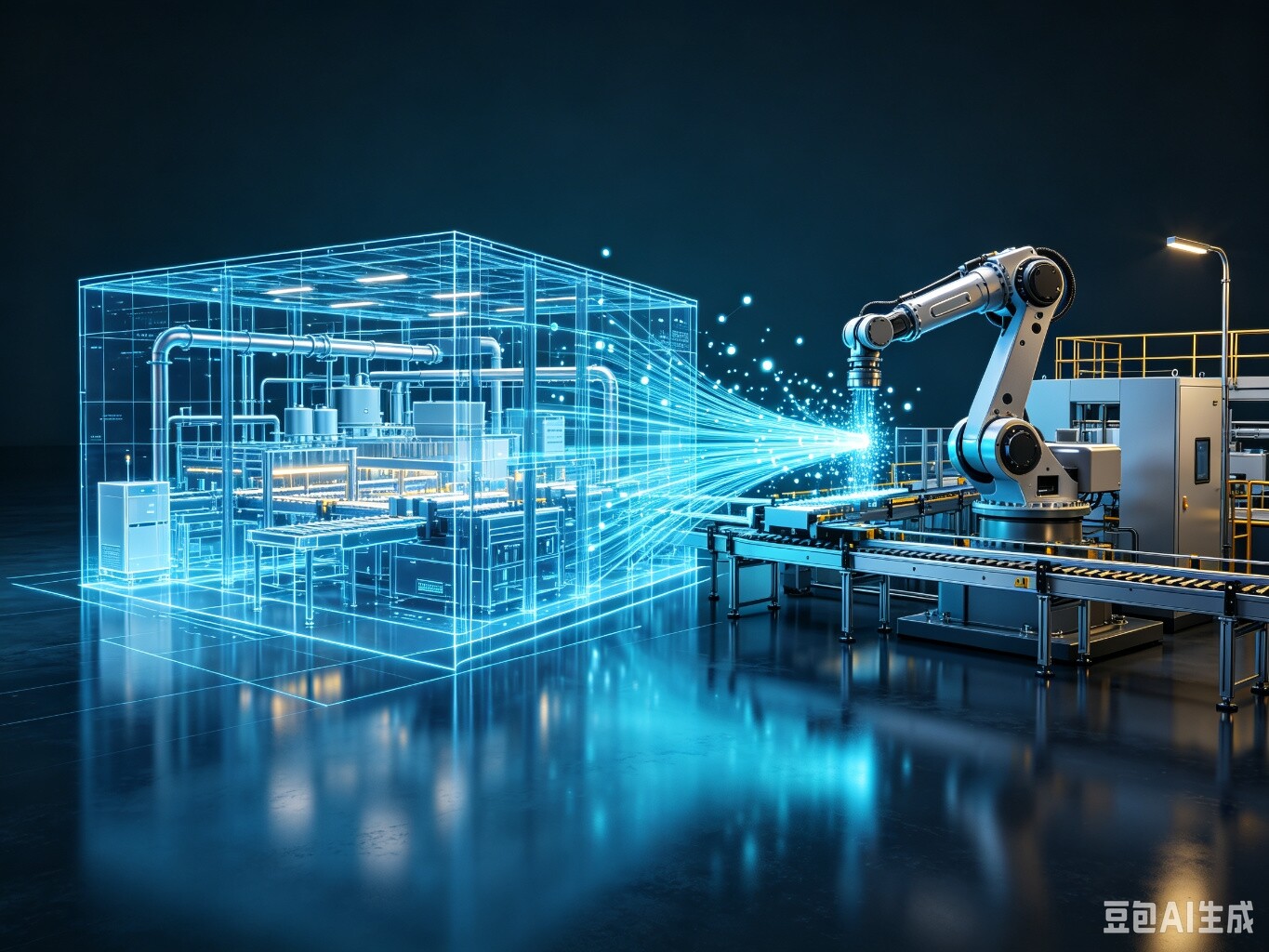
Manufacturing digital transformation is entering a critical phase: isolated systems can no longer support enterprise-wide optimization, and the disconnect between the physical and digital worlds has become a new bottleneck. Industrial metaverse platforms leverage digital twins, IoT, AI, and XR as core technologies to build a digital factory in the virtual space that mirrors and interacts bidirectionally with the physical plant in real time. This enables design, production, operations, and training to occur seamlessly across both spaces—shifting from experience-driven to data-driven decision-making.
Platform Development Direction
1. Industrial Metaverse Platform: Blending Virtual and Real to Reshape the Future of Industry
2. A thinking virtual factory: The complete guide to the industrial metaverse platform
3. Bring the factory into the virtual world: The next-gen manufacturing OS
4. Digital Twin + XR: Three Closed-Loop Scenarios for Industrial Metaverse Platforms
5. From the Physical to the Digital: Industrial Metaverse Accelerates Smart Factory Deployment
01 Digital Twin: A Thinking Virtual Factory
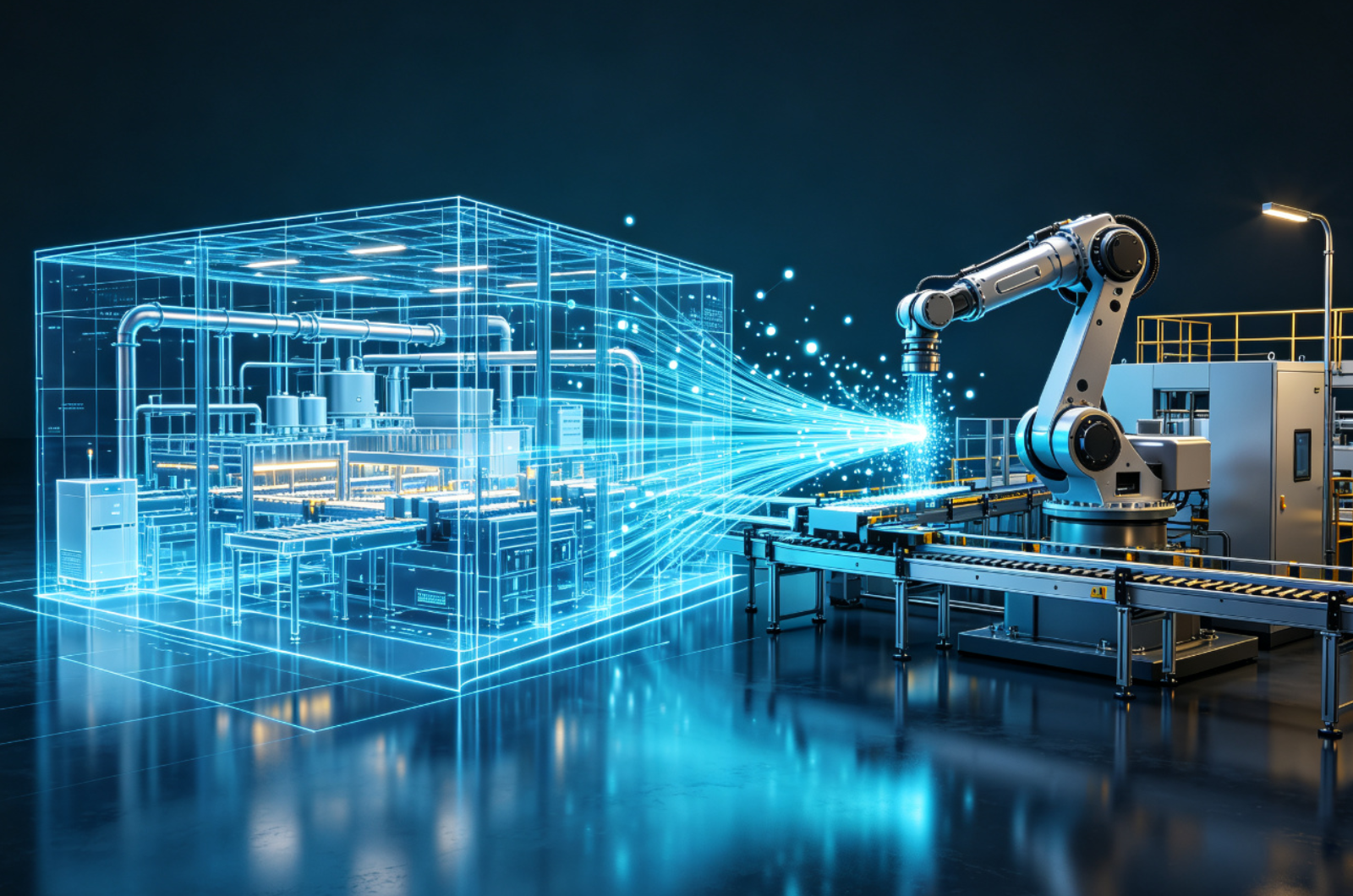
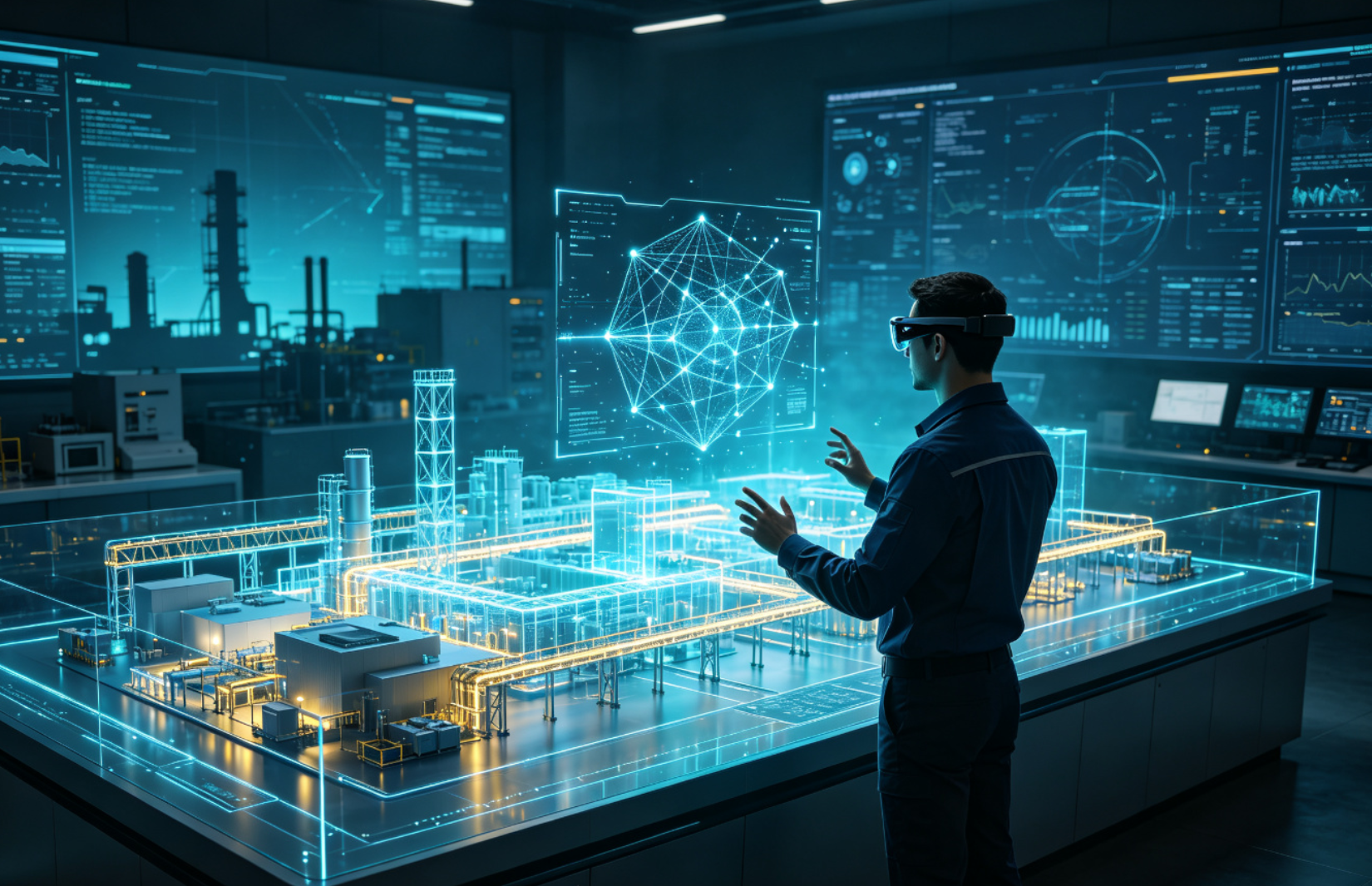
The platform connects devices, production lines, and energy systems in real time via edge gateways and industrial protocol parsing to build a high-fidelity 3D digital twin of the entire factory. Every physical action and parameter is mirrored precisely in the virtual space. By overlaying a simulation engine, you can pre-validate production bottlenecks, logistics paths, and process parameters—iterating repeatedly in the virtual world to contain decision risks before launch and shift the factory from reactive response to proactive simulation.
02 Virtual-Real Synergy: Operations Across Time and Space
Leveraging AR/VR, gesture, and voice interactions, engineers can wear terminals to tour and inspect virtual factories, performing equipment checks and remote diagnostics without requiring experts to visit sites in person. New employee training has evolved from blueprint explanations to immersive hands-on simulations, allowing complex procedures to be practiced repeatedly in a virtual environment before going on-site. Virtual-real collaboration enables knowledge to flow freely—making it faster, safer, and more standardized—and turns cross-regional teamwork into the norm.
03 Scenario Closed Loop: From a Single Factory to an Entire Ecosystem
The platform connects devices and systems at the lower layer while offering standardized application interfaces at the upper layer. It covers typical scenarios such as production simulation, operations drills, campus management, and customer demonstrations, supporting unified access and governance across multiple sites and factories. Every simulation, drill, and digital asset is captured within the platform to build a replicable and scalable industrial metaverse ecosystem—enabling one platform to be deployed across more factories and driving continuous value from digital capabilities.
04 Platform Architecture: One Foundation, Three Application Layers
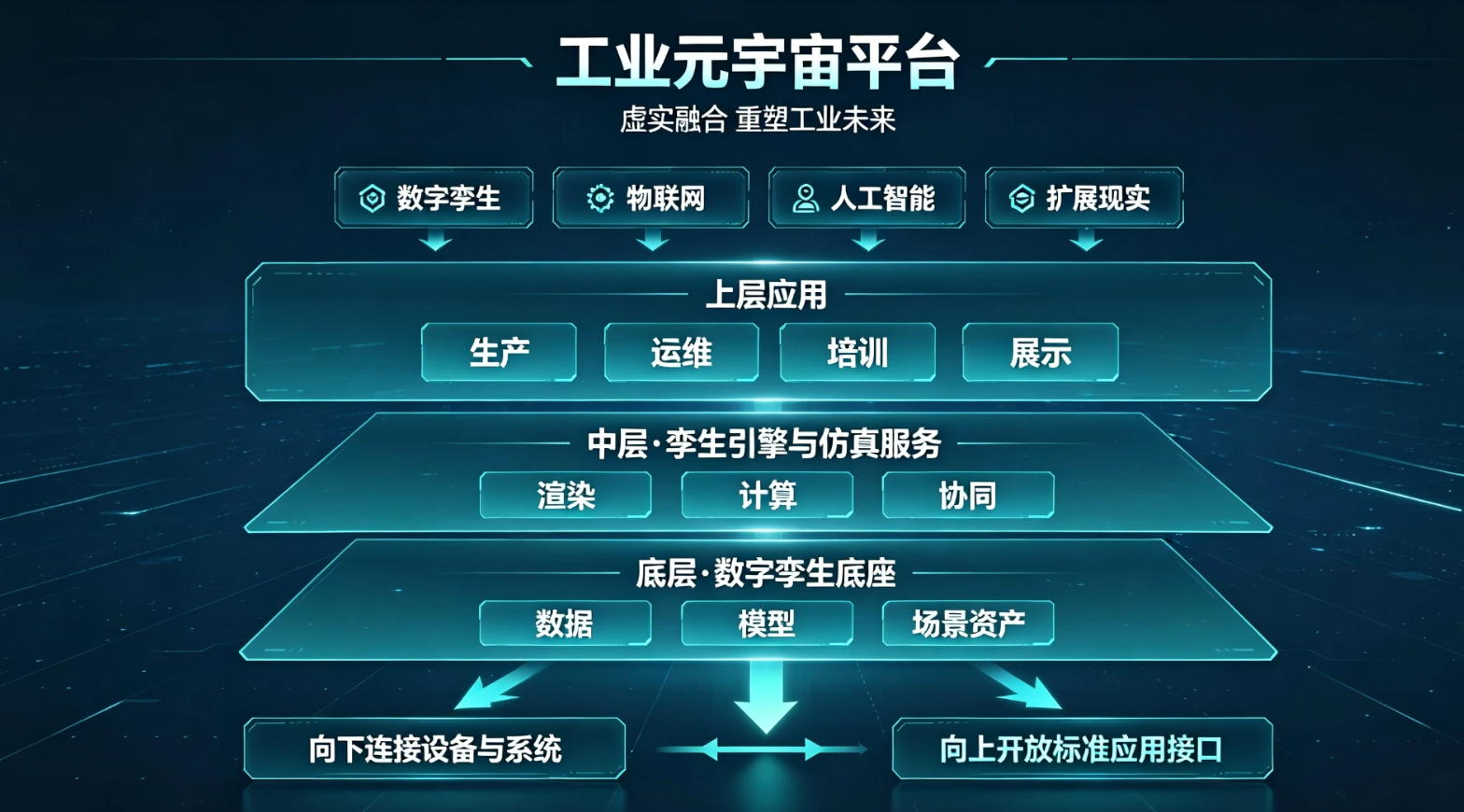
The platform adopts an open architecture of "foundation + applications." The foundation layer is a digital twin base that unifies data, models, and scenario assets. The middle layer consists of the twin engine and simulation services, providing rendering, computation, and collaboration capabilities. The top layer delivers various applications for production, operations & maintenance (O&M), training, and demonstrations. Enterprises can deploy the entire solution at once or start with specific scenarios and expand gradually—lowering entry barriers and delivering quick results.
Industrial Metaverse is not a concept—it's the operating system for next-generation manufacturing. It synchronizes the physical and digital worlds, giving every factory an ever-evolving digital twin. Starting with virtual factories, the Industrial Metaverse platform is reshaping the future of industry.
Related Products
SuperAPS Intelligent Production Scheduling System
SuperAPS leverages AI-driven algorithms and multi-factor constraint optimization to build an enterprise-grade intelligent scheduling system for discrete and process manufacturers: one central planning hub at headquarters plus N coordinated execution sites. This transforms scheduling from experience-based decisions into optimal, data-driven outcomes.
TPM Equipment Maintenance - Predictive Maintenance System
Quantitative outcomes of TPM predictive maintenance are typically measured across five dimensions: downtime, cost, efficiency, asset health, and inventory.