
When SRM Meets AI Agents: Supply Chain Management is Evolving
Has your enterprise implemented SRM? Where are you stuck—data, rules, or organization?

When SRM Meets AI Agents: Supply Chain Management is Evolving
2026 · 10 Supply Chain Digital Insights
Figure 1: AI-Driven Supply Chain Management Hub
Many manufacturers have deployed SRM (Supplier Relationship Management) systems for years. While supplier lists, orders, and invoices are in the system, procurement teams still rely on Excel spreadsheets and WeChat groups when making decisions.
On the other side, change is already underway: among Walmart's pilot suppliers, 82% reported being more willing to negotiate with AI; Honeywell completed over 2500 autonomous negotiations using AI, covering $2 billion in supplier spend; and an industrial goods company in China halved its manual sourcing time with its AI sourcing engine.
The gap isn't in technology, but in how we understand the same problem:AI Agents don't just add a chat box to SRM; they transform how supply chain management operates.
This article avoids jargon and focuses on three key points: how AI Agents are transforming SRM, which companies have already realized measurable benefits, and how to determine if it's the right move for you.
01What truly matters isn't what AI Agents are, but how they're changing things.
Traditional SRM is essentially a "process logging tool": it systematizes supplier onboarding, RFQs, orders, reconciliation, and performance evaluation—but decision-making and execution still rely on humans. The system remembers who visited and what was purchased, but cannot answer: "Who should we engage now? Who needs monitoring? What's the next step?"
With AI Agents, SRM shifts from "recording processes" to "driving operations": it detects data changes, performs price comparisons and risk assessments, automates compliance workflows, and communicates directly with supplier systems.
The shift is from humans operating systems and logging processes to systems understanding business, agents executing actions, and humans defining boundaries.
02First, let's clarify: what an AI Agent is—and isn't—in the supply chain.
In a supply chain context, an AI Agent functions as a "digital employee": it understands business objectives, breaks complex tasks into multiple steps, accesses system data and tools, executes each step, and delivers results.
It's not a chatbot. Chatbots only answer questions; agents take action—requesting quotes, validating contract terms, and freezing anomalous orders.
It's not just an ordinary automation script. Scripts run by fixed rules; Agents can make decisions within those boundaries and pause to seek human confirmation when anomalies occur.
It's not a "universal price-cutting tool." It improves decision quality and process efficiency. The actual savings depend on whether the enterprise has the data, rules, and organizational readiness to support it.
Understanding this is critical: the boundaries of an agent define the limits of enterprise management.
03The four variables that truly matter
Shift from post-event to real-time awareness.Traditional performance scores update monthly. AI Agents instantly update dynamic supplier scores upon completion of incoming quality inspections and automatically adjust sampling strategies. The system proactively alerts on consecutive delivery fluctuations or abnormal price spikes—no need to wait for end-of-month reports.
Decision-making: From "Experience" to "Algorithms".AI automatically parses diverse quotation formats, calculates a "clean cost" by integrating historical transaction prices, industry indices, and market data, and identifies unreasonable high or low bids before negotiations. Sourcing is no longer limited to the lowest price; instead, it recommends an optimal supplier mix based on performance, capacity, and location.
Execute: From human-guided to unmanned.Automatically generate purchase requisitions by linking inventory and production planning. When placing orders, AI automatically validates framework agreement pricing, payment terms, and delivery conditions. On the finance side, OCR combined with AI performs three-way matching for orders, receipts, and invoices; payments are initiated automatically upon successful verification.
Collaboration: From one-way to two-way.The Supplier Portal features an integrated AI assistant that answers bidding, order acceptance, and reconciliation queries 7×24. Beyond that, Procurement Agents and Supplier Agents connect directly, enabling suppliers to instantly view their performance gaps and automatically submit remediation reports.
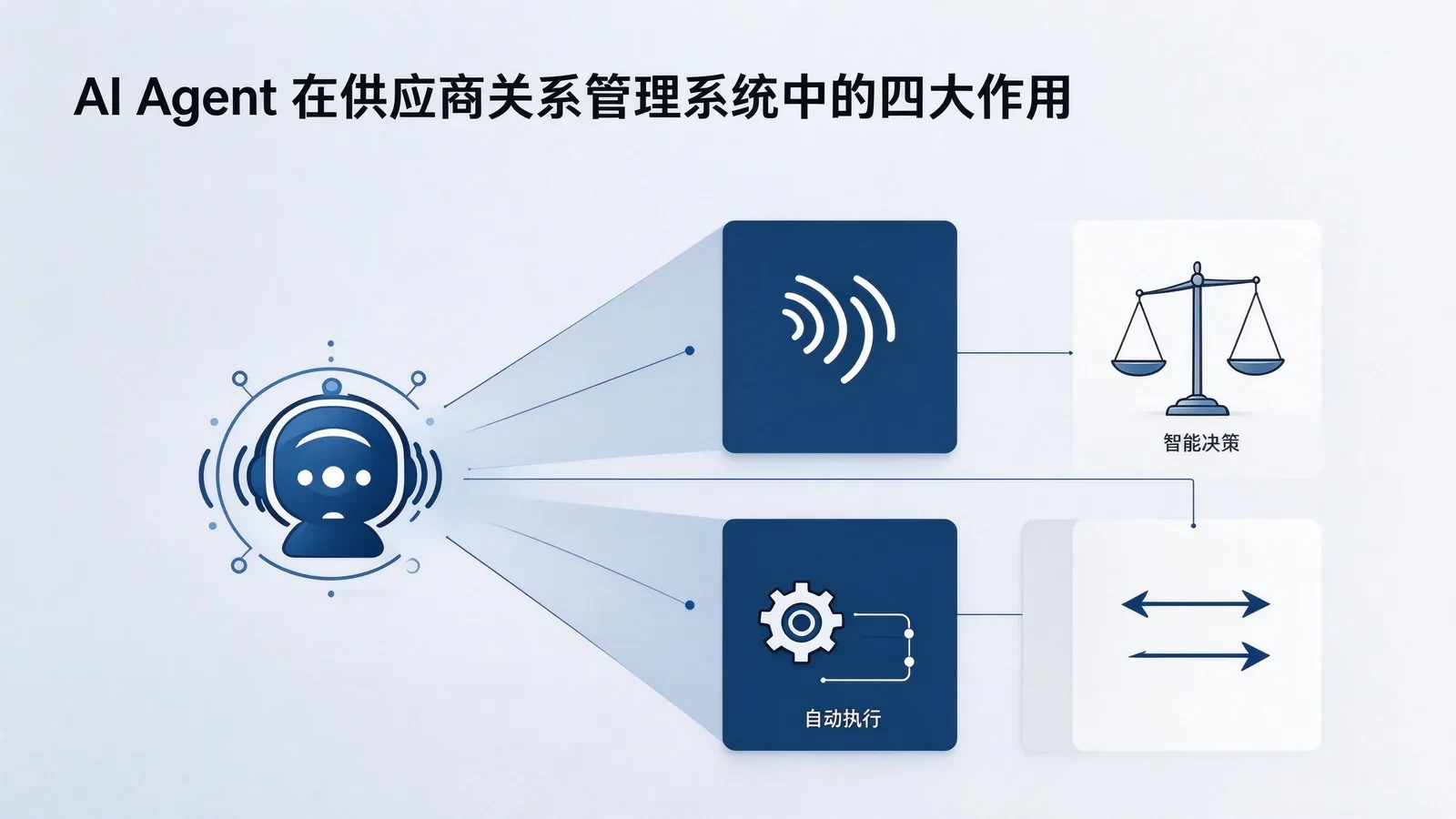
Figure 2: Four key use cases of AI Agents in SRM
04Case Studies & Data: Value isn't a concept—it's verifiable numbers.
First, look at the overseas market. After Walmart deployed its AI negotiation platform, 82% of participating suppliers reported being more willing to negotiate commercial terms with AI. Honeywell completed over 2500 autonomous negotiations using AI, covering $ 5 billion in supplier spend, and optimized payment terms by 10% without adding headcount—note that this reflects the scale of negotiation coverage, not direct savings. SUEZ reported a 80% reduction in manual procurement request reviews and an approximate 90% shortening of the application cycle. Nissan reduced its single sourcing cycle from 25 days to 12 days through autonomous sourcing. A Boston Consulting Group study estimates that reengineered procurement processes could deliver 8%–15% in cost savings and 30%–60% compression in sourcing cycles—these are potential gains, not guarantees.
Looking at the domestic market: After Yangcai Group deployed AI sourcing and supplier profiling engines, manual sourcing time was reduced by 50%, supplier risk identification accuracy exceeded 90%, and overall procurement costs for partner companies dropped by 5%–15%. JD Industrial built an industry supply chain large model, with its AI procurement assistant now implemented in over 40 application scenarios. On the market side, according to an IDC report, China's Supplier Relationship Management (SRM) software market size reached approximately 147.3 billion yuan in 2024, growing 18.6% year-over-year, and is projected to reach 174.2 billion yuan by 2025.
These metrics differ in scope: some reflect negotiation coverage, others measure process efficiency gains, and still others indicate savings potential. Understanding the metric definition is more important than memorizing the numbers.
05Three common misconceptions: address these before implementation
Misconception 1: "AI Agents are just for automatic price negotiation."Its true value lies in process efficiency and decision quality: compressing 3–4 hours of price comparison into seconds, and reducing a 25-day sourcing cycle to 12 days. Saving money is the outcome, not the feature.
Misconception 2: "It doesn't matter if the data is slightly off; AI will handle it."On the contrary, AI amplifies data issues. As a supplier data management expert put it: when AI fails, the root cause usually lies one level upstream—in the master data feeding it. Bad data doesn't magically improve just because AI is involved; it simply accelerates errors.
Misconception 3: "Implementing the system means you're done."Industry surveys show that about 17% of enterprises have deployed agent procurement at a medium-to-large scale, while 44% are still in the pilot phase. Interest is outpacing organizational change. Without reengineering processes, permissions, and human-machine workflows, systems alone won't deliver value.
06For future projects of this type, use this framework.
To determine if a company can truly benefit from AI Agent + SRM, ask these three questions first:
Is the data trustworthy?Material codes, supplier master data, and historical transaction prices: are they aligned under a single standard and sourced from one place? Without proper data governance, the faster your Agent runs, the faster it compounds errors.
Are rules writable?Can access criteria, comparison rules, approval authority levels, and risk thresholds be converted into machine-executable logic? When these rules exist only in experienced experts' minds, agents have no starting point.
Can the organization handle it?Has anyone defined the boundaries of Agents, audited their anomalies, and absorbed the capacity they release? Without designing human-machine collaboration, efficiency gains will become management burdens.
Recommended implementation sequence: first establish data governance, then codify business rules, pilot high-frequency low-risk scenarios, and finally drive organizational and process alignment.
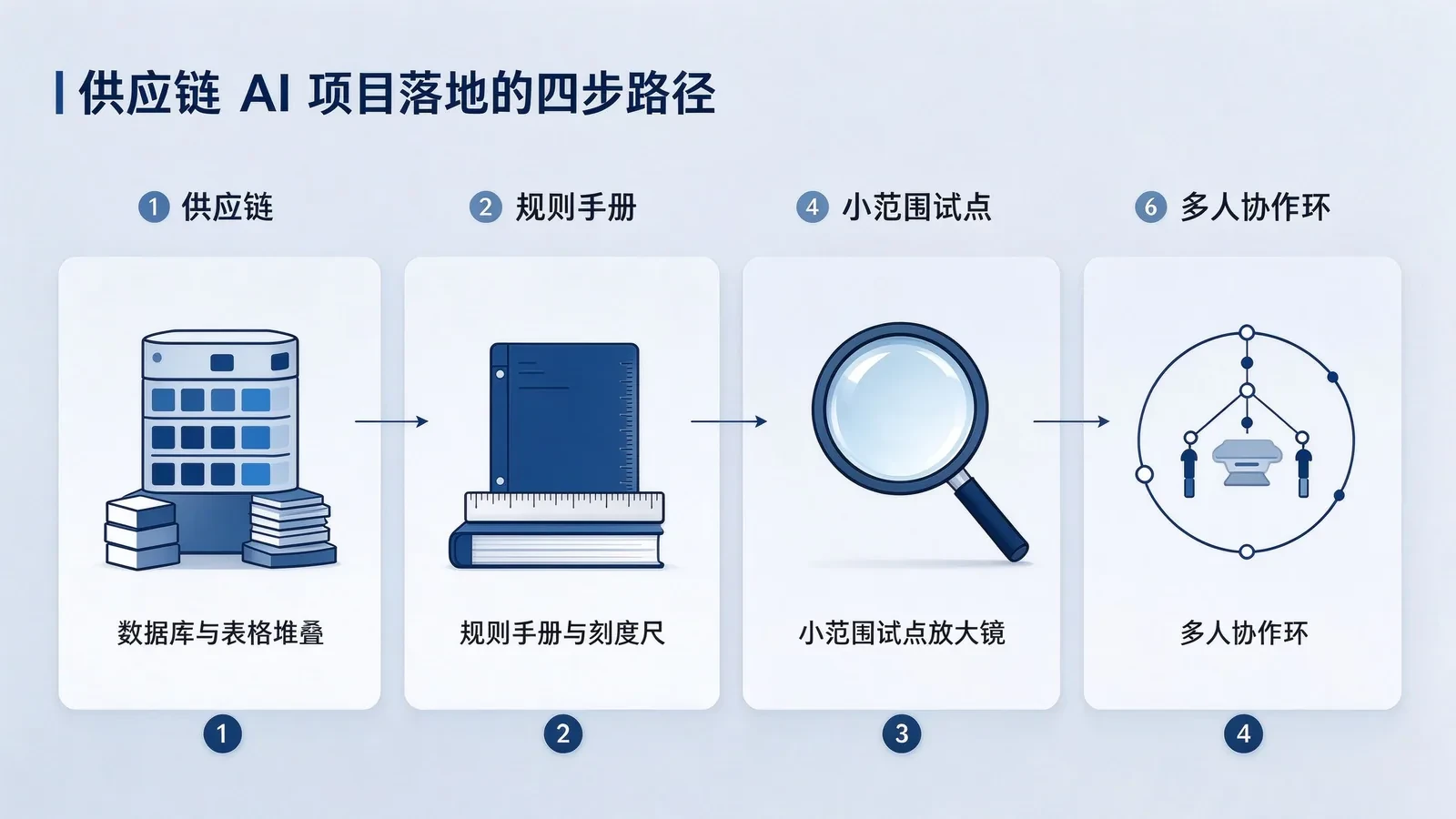
Figure 3: Four-Step Roadmap for Implementing Supply Chain AI Projects
Technology has already outpaced most enterprises. The real bottleneck isn't whether AI agents are powerful—it's whether your own data, rules, and organizational structure are ready to deploy them.
Understanding this shift matters more than chasing concepts.Decide whether to join by checking three things: Is the data reliable? Are the rules writable? Can the organization handle it?
Related Solutions
Enterprise AI Transformation + FDE Advisory Coaching
Provides end-to-end AI-driven digital transformation top-level planning and full-cycle implementation support for enterprises.
AI Agents in the Workshop: A MOM Manufacturing Operations Solution Built on WorkBuddy
AI Agent + MOM: Bridging the Gap from "Chatting" to "Getting Things Done" with a Robust Foundation.
How to scale enterprise-grade AI digital employees? 90% of companies get stuck here.
AI is not a workforce reduction tool—it's an efficiency multiplier: the right way for enterprises to scale AI adoption.