
Master craftsmen' experience, now no longer confined to their minds
Application Scenarios and Solutions for AI Glasses in Industrial Intelligent Manufacturing
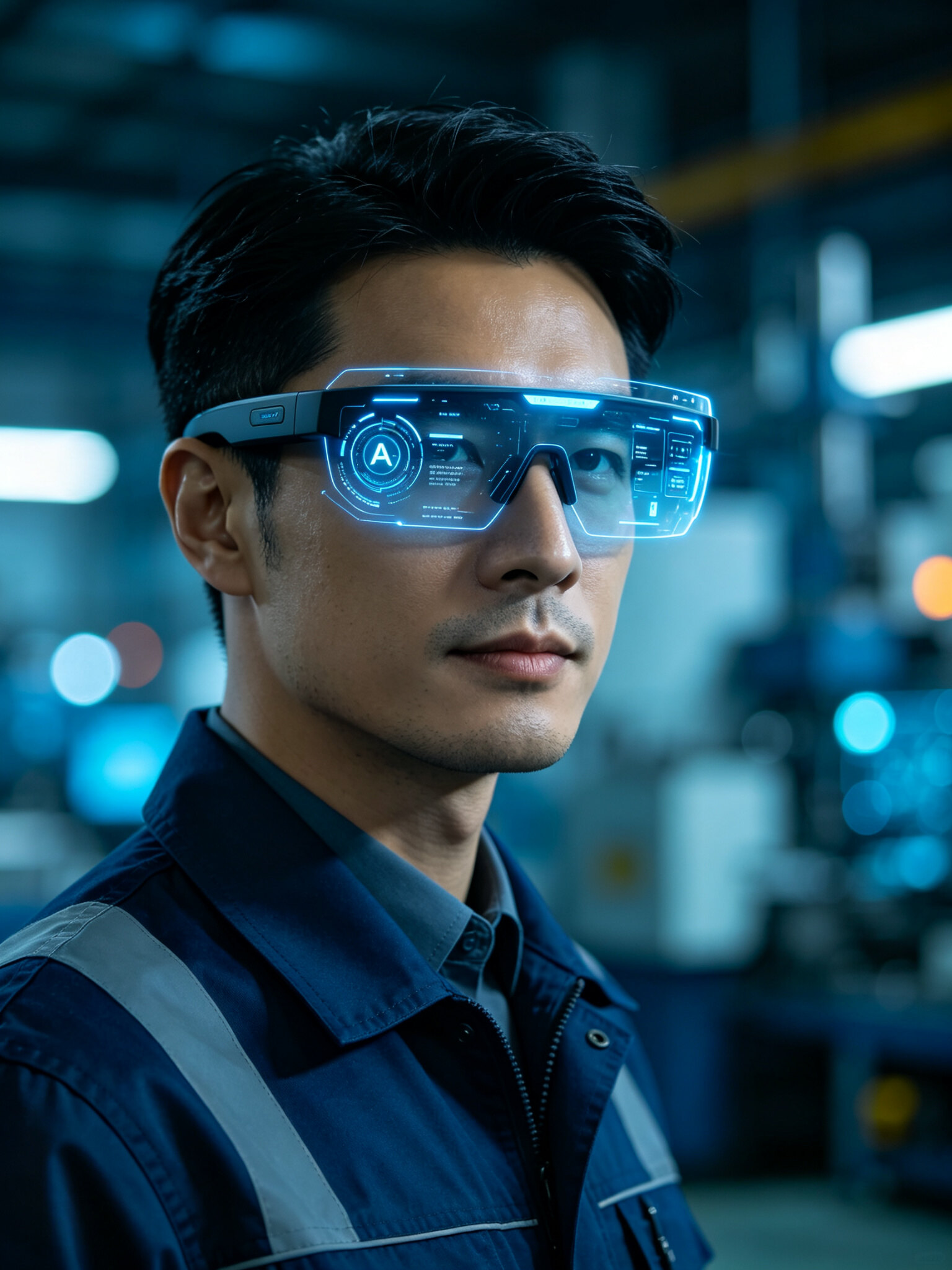
Lead
A seasoned technician retires, and the imported equipment suddenly alarms; a production line halts at midnight, while the only person who truly understands it is thousands of miles away. This is a dilemma facing almost every manufacturing company: expertise resides in the veteran's mind, problems occur on the shop floor, and all they can do is make a confusing long-distance call to bridge the gap.
In the past, solutions relied on "phone calls + photos + waiting for experts to arrive." Now, there's a new option: field staff wear AI glasses, allowing experts to virtually join the scene from their first-person perspective—marking issues in real time and guiding operations as they watch.
AI glasses are becoming the new entry point for industrial sites—hands-free, first-person view, what you see is what you get. This article clarifies four key points: why they're ideal for industrial settings, where they can be applied, what a complete solution looks like, and what enterprises should watch out for when deploying them.
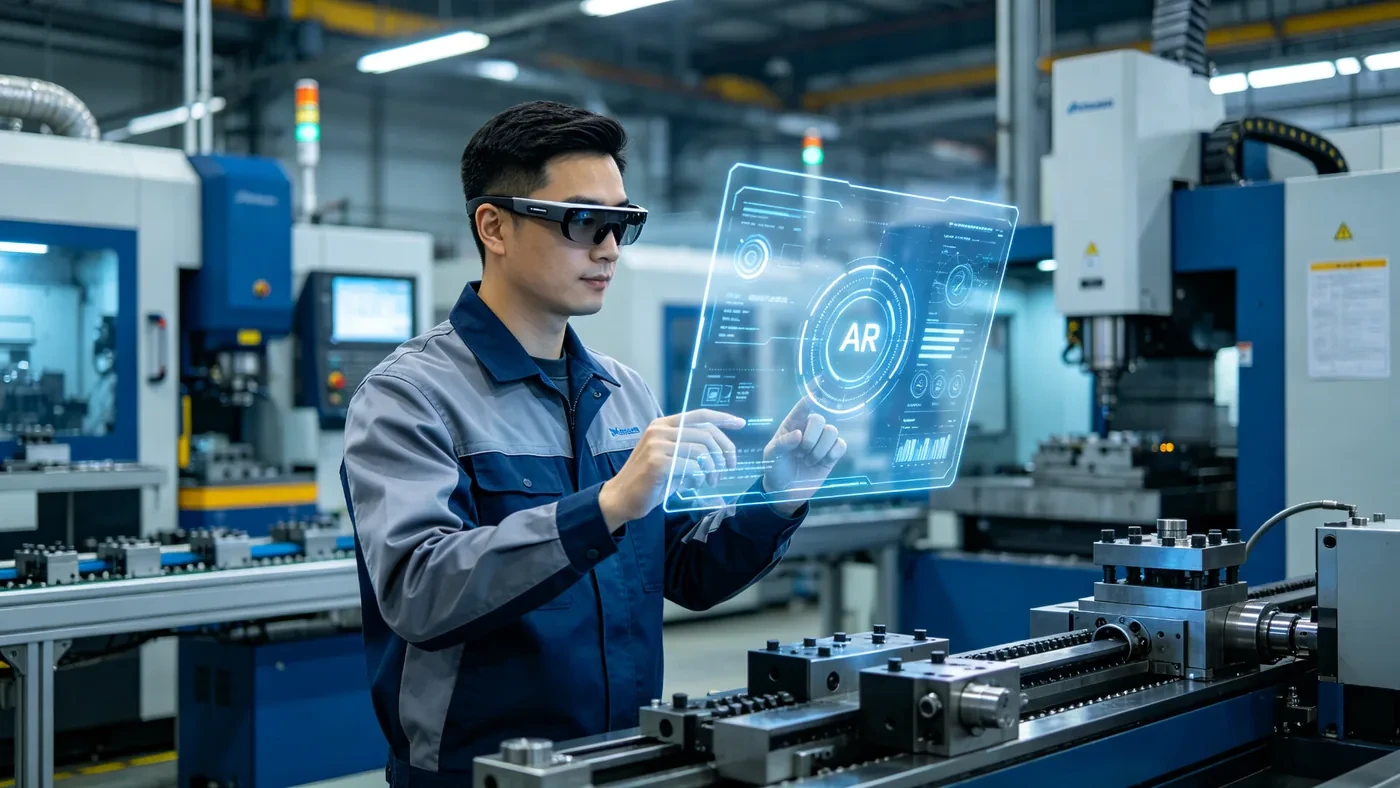
▲ Information appears before your eyes, not in your mind — the first gift AI glasses bring to industrial sites.
Why 01 AI Glasses Are Ideal for Industrial Sites
Consumer-grade AI glasses are familiar, but industrial scenarios demand a different set of capabilities. Their value stems from three key attributes:
First, hands-free operation.Maintenance, assembly, and inspections are all two-handed tasks. Checking blueprints on a phone, flipping through manuals, or taking photos to record data every time you "put down the tool and pick up the phone" wastes efficiency. Project information directly into your field of view so your hands never have to leave the tool.
Second, first-person perspective.The biggest challenge in phone communication is information loss. Descriptions like "the third valve on the left" or "move it a bit to the right" rely entirely on the listener's imagination. First-person video ensures experts and workers see exactly the same view, drastically reducing communication costs.
Third, real-time connectivity.Edge computing enables most AI inference to run directly on the glasses, reducing latency to 50—100 ms. 5G networks support real-time high-definition video streaming. Data flows bidirectionally: tasks are pushed to your view, while real-time field data is streamed back to the system.
In simple terms, the core need in industrial settings is:Information appears before your eyes, not stored in memory; expert expertise is instantly accessible, rather than waiting for someone to arrive.
02 Five Core Application Scenarios
The value of AI glasses in industrial settings centers on five key scenarios:
1. Remote collaboration and expert guidance.Real-time first-person video from on-site personnel enables experts to provide remote guidance via voice, text, and AR annotations as if they were onsite. Equipment installation, debugging, troubleshooting, and cross-border line support can all be handled remotely, significantly reducing travel costs. Industry case studies show some companies have reduced maintenance time by 60% and cut travel expenses by 35%.
2. Assembly Work Instruction (E-SOP).Automatically match assembly workflows based on production orders and product models. Overlay text prompts, diagrams, 3D models, and assembly guidance within the field of view. Integrate with torque wrenches and other tools to provide automatic alerts when parameters meet specifications. A total assembly case study from an automotive manufacturer shows assembly time per unit reduced from 45 minutes to 28 minutes, with the pass rate for critical fastening points increasing from 92% to 99.6%.
3. Intelligent InspectionFollow the inspection route assigned by the system, point by point. Automatically recognize equipment details and instrument readings. Receive real-time alerts for anomalies with evidence logging, and sync inspection records and data back to the system. In a pilot program at a chemical company, single-inspection time was reduced by 60%, and overall inspection efficiency improved by nearly 300%.
IV. Quality Inspection and Evidence Collection.First-person recording of the work process with visual assistance to detect misassembly, missing parts, and cosmetic defects. Traceable inspection process eliminates post-hoc disputes.
5. Training and MentoringStandardize expert operators' workflows into clear SOPs, enabling new hires to learn by example and follow step-by-step instructions. This significantly reduces onboarding time. In one case, training duration was cut from 8 weeks to 3 weeks.
All five scenarios point to one thing:Move expertise from "human brains" into the "system," then embed that system right in front of your eyes.
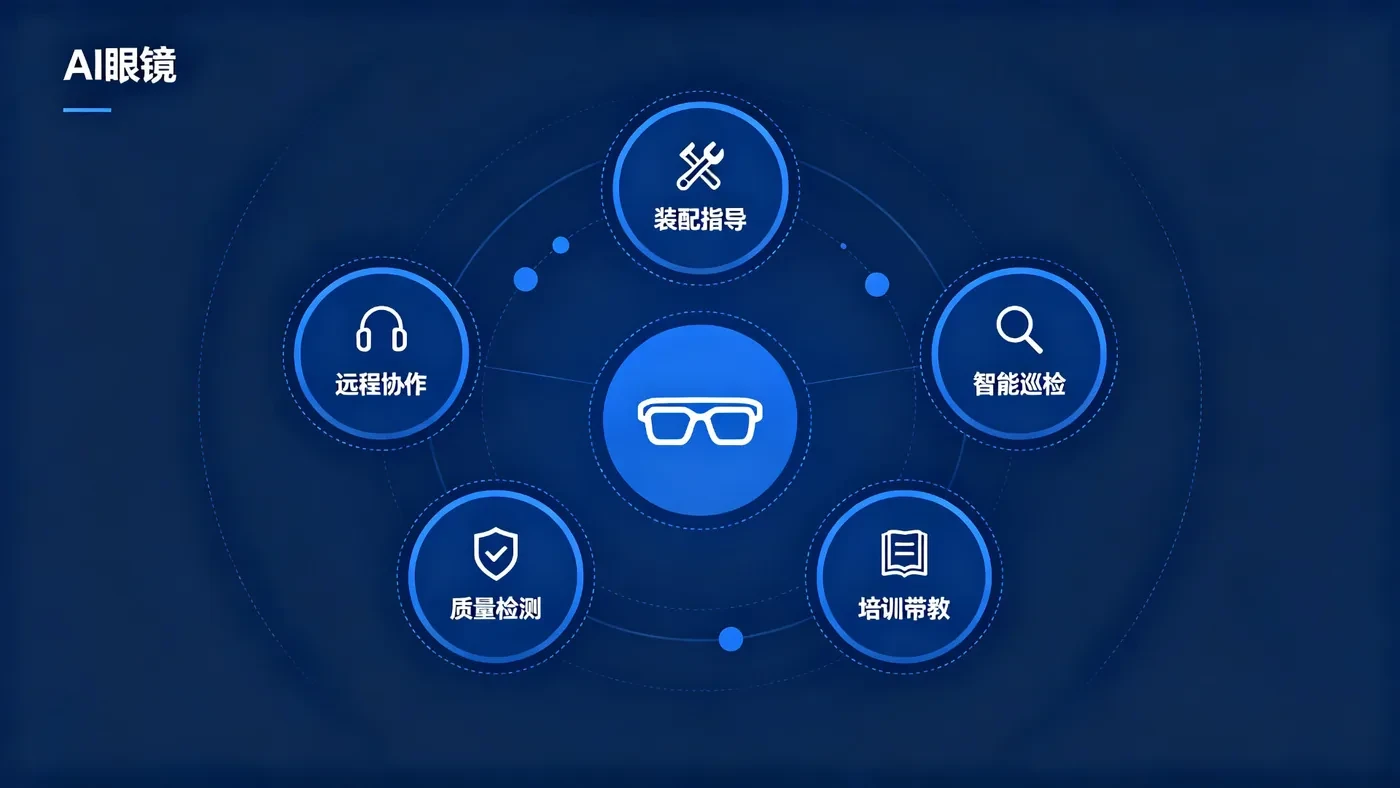
▲ Remote collaboration, assembly guidance, smart inspections, quality checks, and training onboarding—five scenarios converging on one goal: digitizing expertise.
What does a complete solution for 03 look like?
A single pair of glasses won't solve the problem. A complete industrial AI eyewear solution typically consists of three layers:
Device Layer: AI Glasses Hardware.Ultra-lightweight design (30–150g total weight), dust and water resistance, drop protection, and hot-swappable battery. Features first-person camera, voice interaction, and expandable I/O for scanning and temperature sensing. Core requirements: comfortable to wear, durable enough to withstand daily use, and affordable.
Connectivity Layer: 5G and Edge Computing.5G private networks or campus networks enable low-latency HD video transmission. Edge computing shifts most AI inference to the device or edge, reducing latency to 50–100 ms and enabling local operation even offline.
Platform Layer: Integration with business systems.This is where true value lies: integration with MES, work order systems, and knowledge bases enables automatic task assignment to your workspace, real-time data transmission during operations, centralized management and delivery of AR content (SOPs, drawings, instructional videos), and seamless linkage between on-site evidence capture and equipment records.
Summarize in one sentence:The terminal is the entry point, connections are the arteries, and the platform is the brain.Glasses are just the screen; the value they deliver depends on the systems behind them and the content they carry.
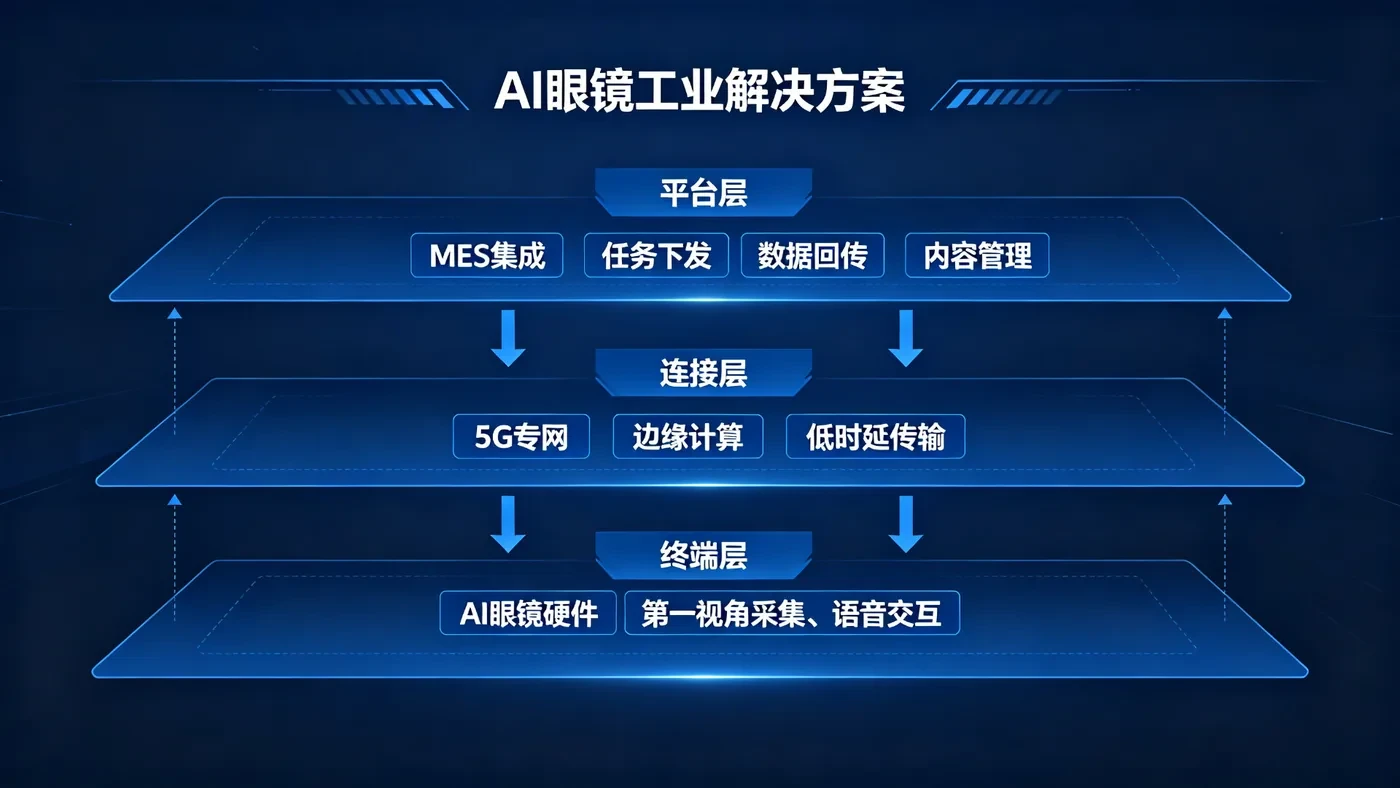
The terminal is the entry point, connectivity is the artery, and the platform is the brain—all three layers are essential.
04 Case Validation: Let the Numbers Speak
Publicly disclosed implementation cases in the industry (with varying metrics, for reference):
Industry Scenarios | Disclosure Effect | Source |
|---|---|---|
Final assembly workshop (engine assembly) at a leading domestic automotive manufacturer | Reduced assembly time per unit from 45 to 28 minutes, boosting efficiency by 38%; improved pass rate at critical fastening points from 92% to 99.6%. | Industry Media Case Studies |
Large Chemical Enterprise (Safety Inspection) | Single inspection time reduced by 60%, inspection efficiency improved by nearly 300%. | Industry Media Pilot |
Automotive Factory (Equipment Maintenance) | Reduced average repair time from 45 to 18 minutes, improving inspection efficiency by 40%. | AR Vendor Case Studies |
Leading automotive electronics company (remote support) | Lost workdays reduced by approximately 1/6, travel costs down by 35%, and maintenance time saved by 60%. | AR Vendor Case Studies |
Wiring Harness Manufacturer (Assembly + Training) | Wiring harness assembly time reduced by 51%, defect rate dropped from 4.8% to 0.7%, and new hire training shortened from 8 weeks to 3 weeks. | AR Vendor Case Studies |
Note that these figures come from different companies and statistical methodologies, and are mostly disclosed by vendors; they should not be directly compared. However, they all point in the same direction—AI glasses deliver real, measurable improvements in high-frequency scenarios like remote support, assembly, and inspections.
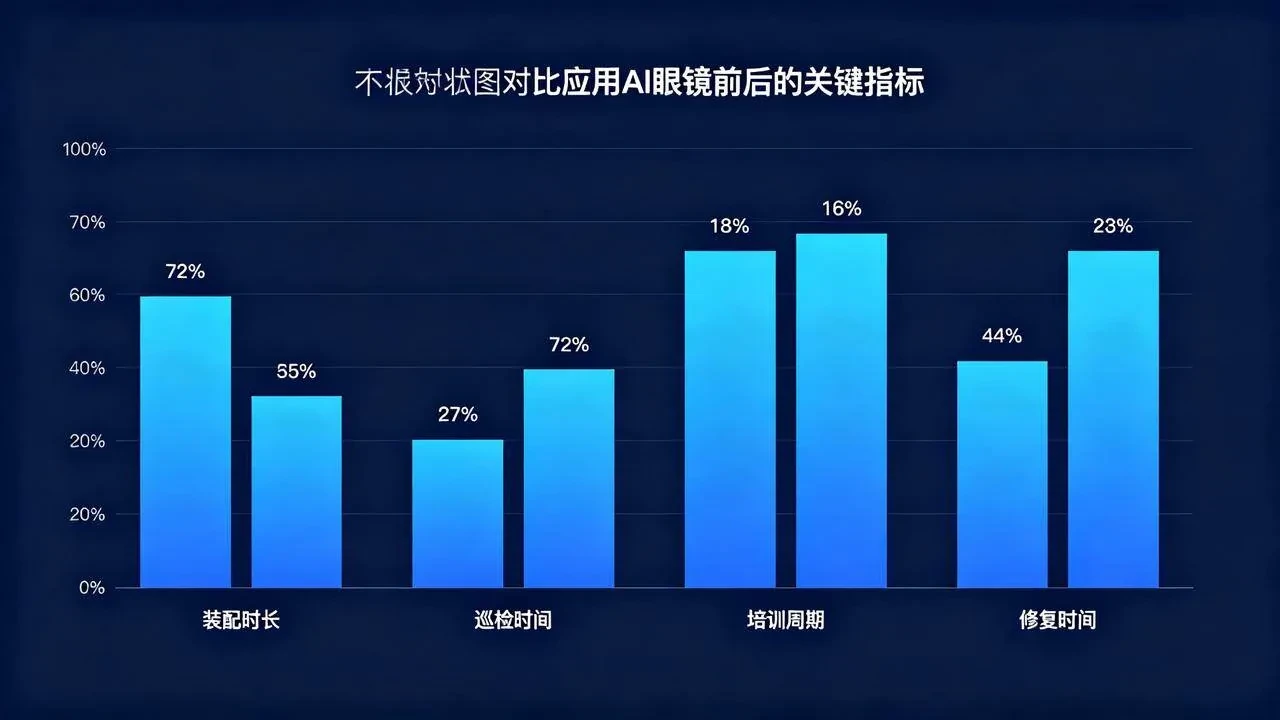
▲ Assembly, Inspection, Training, and Repair: High-frequency scenarios now deliver quantifiable, replicable improvements.
05 3 Common Myths to Rule Out First
Misconception 1: "AI glasses are just for video calls."Video calls are just the starting point. Real value comes from task-driven workflows: automatic work order dispatch, dynamic on-screen job guidance, and real-time data transmission. The glasses serve as a "field terminal" integrated into the system—not merely a smartphone worn on your head.
Myth 2: "Putting on glasses is enough."Hardware is just the entry point; content and integration are what matter. Is your SOP structured? Have master craftsmen's expertise been codified into actionable guidance? Can the system integrate with MES? Without prepared content, even smart glasses are just props.
Myth 3: "Only large enterprises can afford this."Remote support, inspections, and other single-scenario pilots have low entry barriers. Start with 1 to 2 high-frequency pain points, validate the workflow, then expand—small businesses can implement this too.
How to get started with 06 enterprise implementation
Step 1: Select a scenario.Start with scenarios that are both the most painful and offer the clearest ROI—remote expert support and equipment inspections are typically the top choices.
Step 2: Content first.Structure the master craftsman's workflows and process key points into AR work instructions. Without content, the glasses have no "brain."
Step 3: System Integration.Integrate with MES and work order systems to enable task dispatch and data feedback, creating a closed loop rather than isolated silos.
Step 4: Iterate quickly.Pilot in one workshop using real data to validate ROI, then scale gradually.
AI glasses won't replace people. They replace outdated workflows like waiting, guessing based on experience, and flipping through manuals. What truly transforms the industrial site isn't the glasses themselves, but the underlying process that digitizes expertise, brings experts to the field in real time, and reconnects data back into systems.
The next question is one every manufacturing company should consider:
1. Your most experienced master craftsman—whose hands now hold that invaluable expertise??Veteran technicians aren't always on-site, yet equipment can now "speak": AI glasses are transforming industrial operations.
2. From "Phone + Photo" to "First-Person View": 5 Industrial Use Cases for AI Glasses
3. Wear AI glasses to boost assembly efficiency by 38%: The "hands-free era" in industrial settings has arrived.
Behind the 300% boost in inspection efficiency: How AI glasses are reshaping factory operations
5. AI glasses are not consumer toys; they are a new form of productivity in industrial settings.
Value of AI Glasses in Industrial Smart Manufacturing:
1. Three Key Features and Five Application Scenarios for AI Glasses in Industrial Use. Features: Hands-free operation, first-person view, and real-time connectivity. Scenarios: Remote collaboration, assembly guidance, intelligent inspection, quality control, and training & mentorship.
2. Edge computing enables most AI inference to run on-device, achieving latency of 50—100 ms, while 5G supports real-time video streaming.
3. Vehicle assembly case study (assembly time reduced from 45 to 28 minutes; pass rate improved from 92% to 99.6%).
4. Industrial chemical enterprise inspection case study (inspection time reduced by 60%, efficiency increased by nearly 300%)
5. Automotive Factory Repair Case (Repair Time: 45 min → 18 min): AR Vendor Public Case.
6. Remote Support Case Study for Automotive Electronics (Travel Costs Reduced by 35%, Repair Time Saved by 60%): Public AR Vendor Case.
7. Harness Manufacturing Case Study (Assembly Time Reduced by 51%, Defect Rate from 4.8% to 0.7%, Training Duration from 8 to 3 Weeks): Public Case from AR Vendor.
Related Solutions
Enterprise AI Transformation + FDE Advisory Coaching
Provides end-to-end AI-driven digital transformation top-level planning and full-cycle implementation support for enterprises.
When SRM Meets AI Agents: Supply Chain Management is Evolving
Has your enterprise implemented SRM? Where are you stuck—data, rules, or organization?
AI Agents in the Workshop: A MOM Manufacturing Operations Solution Built on WorkBuddy
AI Agent + MOM: Bridging the Gap from "Chatting" to "Getting Things Done" with a Robust Foundation.