
Four Steps to Deploy AI Agents: Start with Data Governance
Why the first step in AI implementation isn't deploying a system, but fixing your data.

Four Steps to Deploy AI Agents: Start with Data Governance
2026 10 · AI Agent + SRM Series

Figure 1: Data governance first—clean dirty data into data assets.
In our previous article, we outlined a framework for determining whether an enterprise can achieve real value from AI Agent + SRM by evaluating three key factors: data credibility, rule configurability, and organizational readiness.
Today, we cover Level 1: Data. It's the most common reason for AI project failure—and precisely the step most enterprises want to avoid.
A Deloitte survey reveals that procurement leaders cite "data quality" as one of the top internal barriers to AI adoption. On day one, your AI price comparison bot might treat "Huawei Technologies Co., Ltd." and "Huawei" as two separate suppliers—this isn't a joke; it's a real-world scenario.
This article covers one key point: why data governance must precede AI deployment, and how to do it right.
01Why Data Governance Must Precede AI Implementation
First, accept this counterintuitive fact:AI won't solve data problems; it will amplify them.
As a supplier data management expert once put it bluntly: when AI makes mistakes, the responsibility usually lies one level upstream—in the master data feeding it. Fragmented supplier, contract, spend, and invoice data cause agents to replicate the same error across larger scopes and at faster speeds. It won't turn "one item, multiple codes" into "one item, one code"; instead, it multiplies the cost of "one item, multiple codes" by a hundred.
Manufacturing Case Study: A company's procurement system achieved a demand forecast accuracy of only 65%, far below the target of 85%, due to historical data errors such as duplicate supplier codes and unit mismatches. The issue lies not in the algorithm, but in the data quality.
When discussing the digital and intelligent transformation of manufacturing, People's Daily highlighted this gap: data across different scenarios is inconsistent, incomplete, inaccurate, and non-standardized, limiting the volume of training data and the performance of AI models.
The bottom line is clear: data governance is not an optional step before AI deployment; it is the first critical task.
02What does data governance actually govern?
Data governance doesn't cover all data. It focuses on master data—the core "nouns" that describe key business entities: suppliers, materials, customers, employees, and assets. This data is shared across systems, remains relatively stable, and serves as the foundation for all other data.
When it comes to procurement and supply chain, the most common issues fall into four categories:
Not consistent.The same supplier appears as "Huawei Technologies Co., Ltd." in the procurement system, "Huawei" in the finance system, and "HW-001" on invoices. Similarly, the same item is listed as "M5 Screw" in the warehouse but "5mm Screw" on the production line.
Incomplete.Missing supplier qualifications, bank accounts, and contact details; unable to reach key suppliers in emergencies.
Inaccurate.Confused price units (CNY/piece vs. CNY/thousand), incorrect tax IDs, and expired account details directly impact payments and compliance.
Non-standard.Systems operate in silos with inconsistent standards, preventing direct data integration.
"Data readiness" means that critical data—such as supplier master data, spend categories, contract terms, and approval hierarchies—are unified, standardized, and semantically consistent across systems. Without this foundation, any "intelligence" delivered by AI is built on shaky ground.
03How to Get Started with Data Governance: A Four-Step Approach
Data governance doesn't need to happen all at once, but it must follow the right sequence. We recommend a four-step approach: assess and inventory, define standards, clean and merge, then govern continuously.
Step 1: Inventory and assessment.First, identify the problem and assess its impact. Score each data domain based on business impact, data sharing extent, standardization difficulty, and urgency. Select one domain with the clearest value and highest priority—typically Suppliers or Materials—as a pilot. Starting small and validating value quickly is more likely to succeed than aiming for a comprehensive solution upfront.
Step 2: Standard Definition.Establish master data standards with four core principles: uniqueness, shareability, stability, and validity. For example, prevent duplicate item codes by validating materials through a triple check of "code + name + specification"; uniquely identify suppliers using "name + unified social credit code." These standards are not just documents—they serve as the shared language that all departments must adopt.
Step 3: Clean and merge.Deduplicate, enrich, and correct historical data: Identify potential duplicates first, then verify manually. Transfer inventory, purchase records, and references from duplicate entries to the primary record to create a "golden record." Prioritize high-frequency references and high-impact data rather than processing everything at once.
Step 4: Continuous governance.Exhaust existing data and control new additions: standardize the application portal, enforce duplicate checks, and conduct regular reviews. Embed the roles (applicant, approver, administrator, user) and approval workflows into the system. Data governance is an ongoing process, not a one-time project.
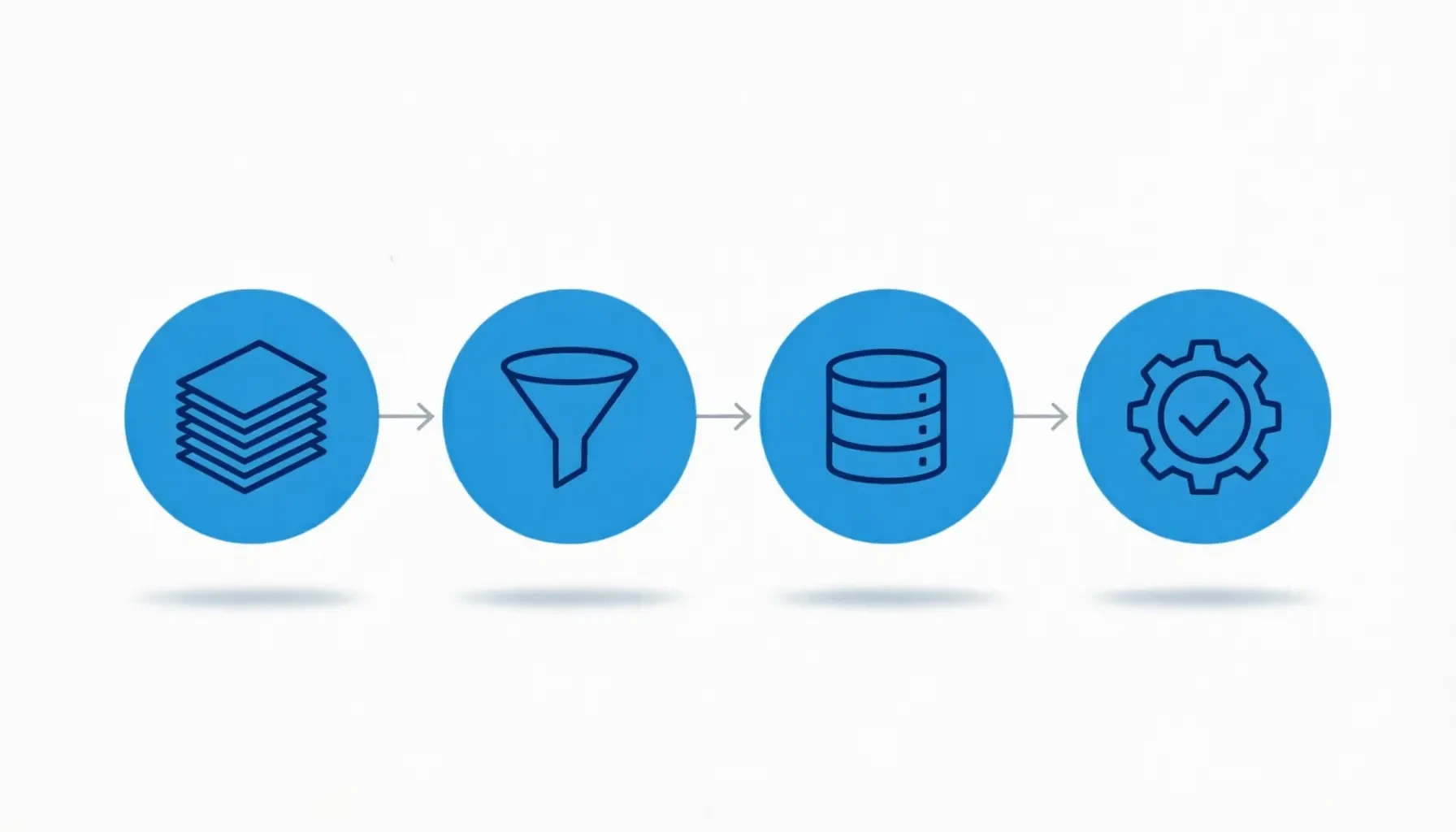
Figure 2: Illustration of the four-step data governance process
04What value does master data governance actually deliver?
A food processing company (referred to as Company S) offers a representative case. Its business systems span over 10 platforms, including ERP, procurement, sales, and logistics, resulting in severe data silos: when entering material information, only code duplication is validated; critical fields like name and specifications lack oversight, causing the same material to have multiple codes across different systems. This forces downstream teams to manually verify data, reducing efficiency by more than 30%. Additionally, supplier information is entered separately by sales and procurement teams, creating large volumes of garbage data tightly bound to business processes.
The governance approach follows a six-in-one framework: Standardization, Process, Platform, Distribution, Organization, and Policy. This includes mapping 14 categories of core master data, establishing standard specifications, creating unified application and approval workflows, and defining roles across four key areas. After the project went live in 2024 12:
Material duplication rate reduced from 18% to 2%, with customer information completeness reaching 99%.
System query load reduced by 60%, response speed improved by 40%;
Data entry approval time reduced from 3 days to 4 hours, with manual verification workload for business units decreased by 50%.
Sales forecast accuracy for the first half of 2025 improved by 15%.
Note a key detail: the heaviest lifting in this project isn't on the platform, but in the business side—who submits, who approves, who maintains, and who uses. Every role is redefined. Master data governance has never been an IT department's solo act.
05Three Common Misconceptions
Myth 1: "Data governance is solely an IT responsibility."On the contrary, data standard adoption, ownership of dirty data, and final authority on metrics are business decisions. IT can build the platform, but success depends on procurement, finance, and production teams aligning on accountability.
Myth 2: "One-time cleanup, forever solved."Existing records cleared, but new ones unchecked—three months later, duplicate codes pile up again. A continuous governance mechanism—centralized entry point, deduplication checks, and regular reviews—is the only way to ensure lasting results.
Myth 3: "Wait until the system is live to start governance."Get the sequence right, or costs double. Clean up your data before deploying AI. Launch systems on a solid foundation—or watch errors compound for a year as you play catch-up.
06Landing Checklist
Check if your data governance can support AI implementation with this checklist:
Did you select the correct pilot domain?Should we start with the high-frequency, low-risk data domains that have the greatest impact (suppliers or materials)?
Does anyone recognize the standard?Are coding standards, naming conventions, and mandatory fields agreed upon across departments and documented in official policies?
Who owns bad data?Is there a clear Data Owner for each master data record, and who is responsible for its quality?
Are there metrics for the results?Are there metrics to track duplication rate, completeness rate, accuracy rate, and approval duration?
If you can't answer all four, your data governance hasn't truly begun—and that's the very first step AI implementation should never skip.
Technology can be bought; data must be governed. Prioritizing data governance isn't conservatism—it ensures AI runs on a trusted foundation.
Has your enterprise implemented SRM? Where are you stuck—data, rules, or organization?
Related Solutions
Enterprise AI Transformation + FDE Advisory Coaching
Provides end-to-end AI-driven digital transformation top-level planning and full-cycle implementation support for enterprises.
When SRM Meets AI Agents: Supply Chain Management is Evolving
Has your enterprise implemented SRM? Where are you stuck—data, rules, or organization?
AI Agents in the Workshop: A MOM Manufacturing Operations Solution Built on WorkBuddy
AI Agent + MOM: Bridging the Gap from "Chatting" to "Getting Things Done" with a Robust Foundation.