
Common AI Digital Transformation Misconceptions: Four Questions and Answers to Clarify Cognitive Biases
Throughout our work with over 300 manufacturing and energy companies, we've consistently heard the same questions: Must AI dismantle existing systems? Should we abandon a PoC if results are underwhelming? This article addresses four common misconceptions about AI transformation by walking through diagnosis, design, deployment, and measurement.
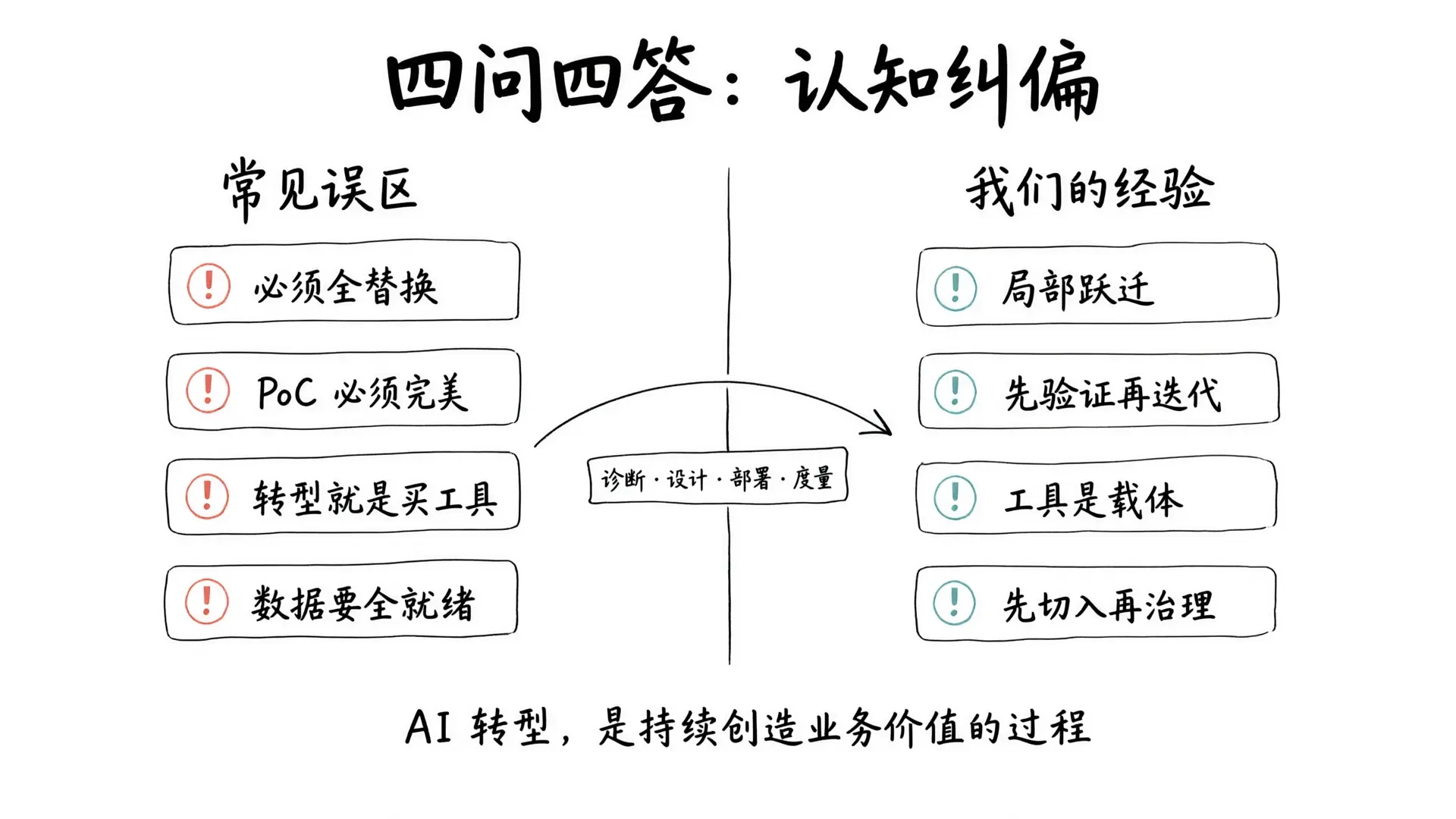
Over the course of serving more than 300 manufacturing and energy enterprises, we've repeatedly encountered the same concerns: "Is AI going to completely overhaul existing systems?" or "Should a project be halted if the PoC doesn't meet expectations?" These questions often stem from misconceptions about AI implementation. At Guanyi Intelligent, we break down digital transformation into four phases: Diagnosis, Design, Deployment, and Measurement. Drawing on our practical experience across these stages, we address the four most common myths one by one.
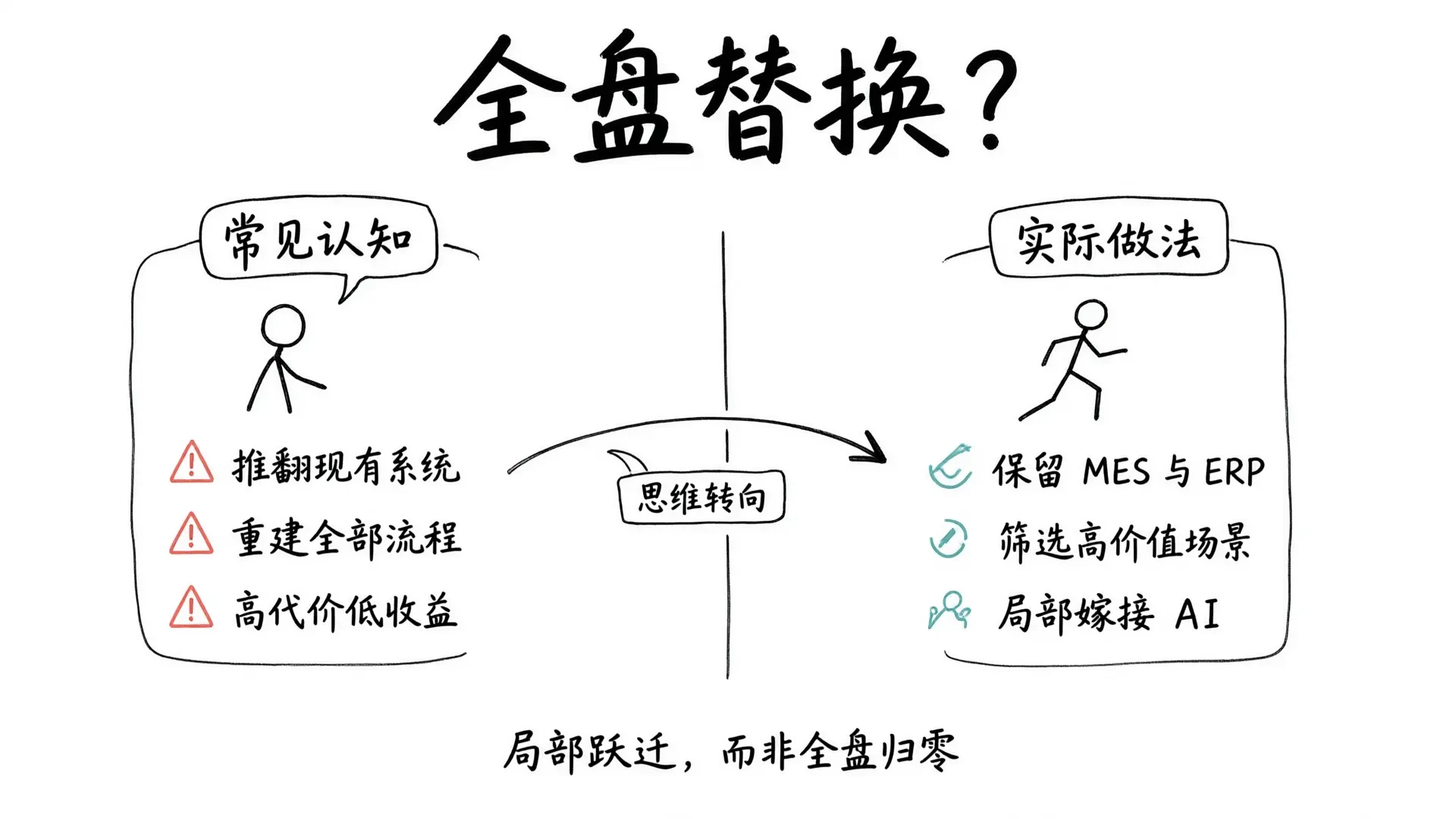
Misconception 1: AI transformation requires replacing all existing systems
Replacement is not the goal; business value is. Manufacturing MES (Manufacturing Execution Systems) and ERP systems often encode years of accumulated process parameters and rules. Rebuilding from scratch incurs costs that far outweigh the benefits. A more effective approach uses a scenario value matrix: first, identify a few high-value scenarios based on impact and implementation difficulty, then integrate AI capabilities into existing systems. Use manufacturing operations agents for production scheduling optimization and computer vision algorithms for quality inspection. Retain your original data assets and replace only what's truly necessary. Transformation drives localized efficiency leaps, not a complete reset.
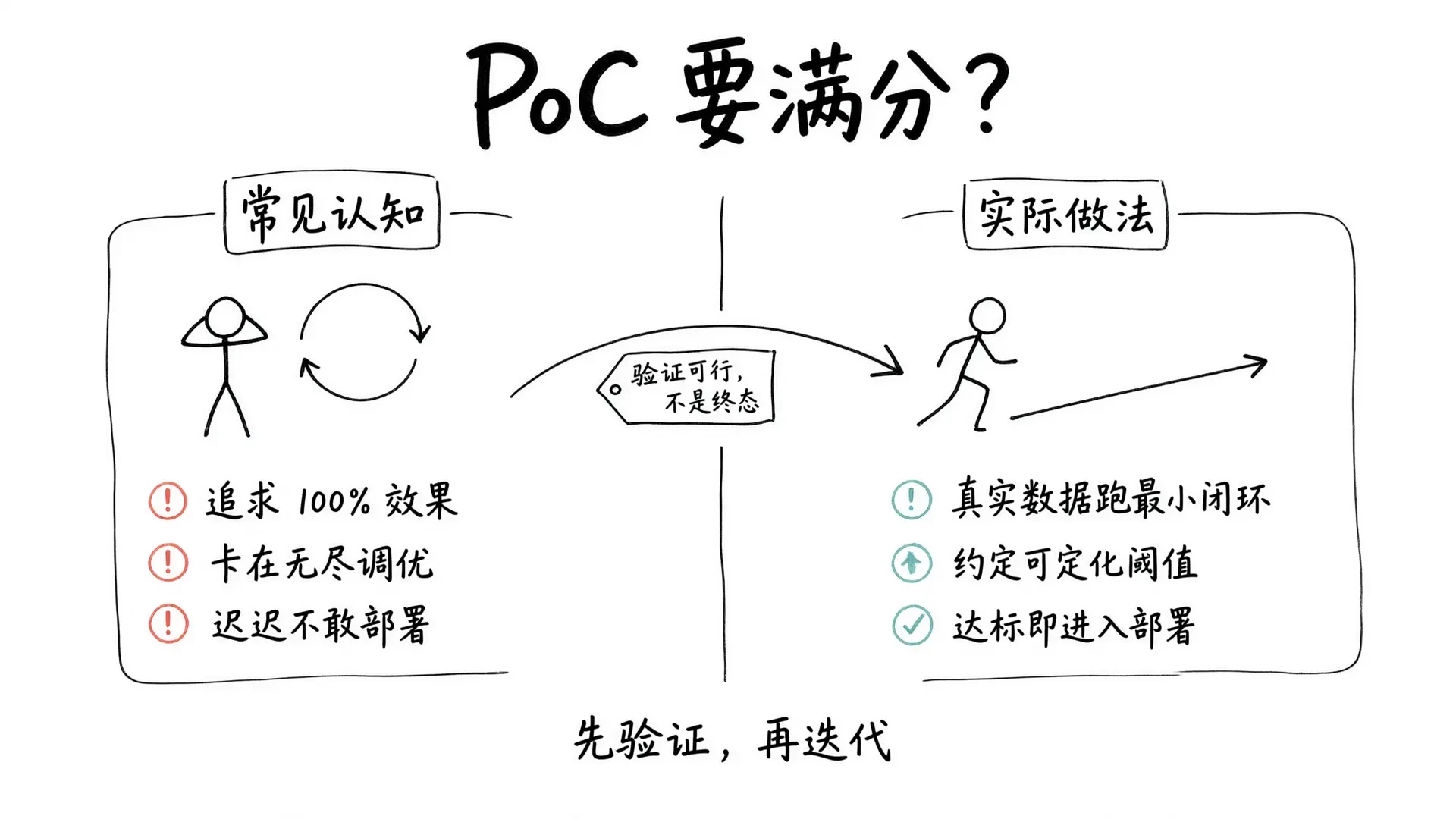
Myth 2: A PoC must be flawless to pass.
The goal of a PoC (Proof of Concept) is to validate feasibility, not to deliver a production-ready solution. Setting the success bar too close to production quality will trap the project in endless tuning. Instead, run a minimal viable loop with real data during the PoC phase to confirm it delivers measurable improvements—for example, whether false-negative rates trend downward or manual effort per step decreases. Once agreed thresholds are met, proceed to deployment; refine accuracy and stability through subsequent engineering iterations. A PoC's purpose is to rule out wrong directions and control investment risk, not to achieve perfection on the first try.
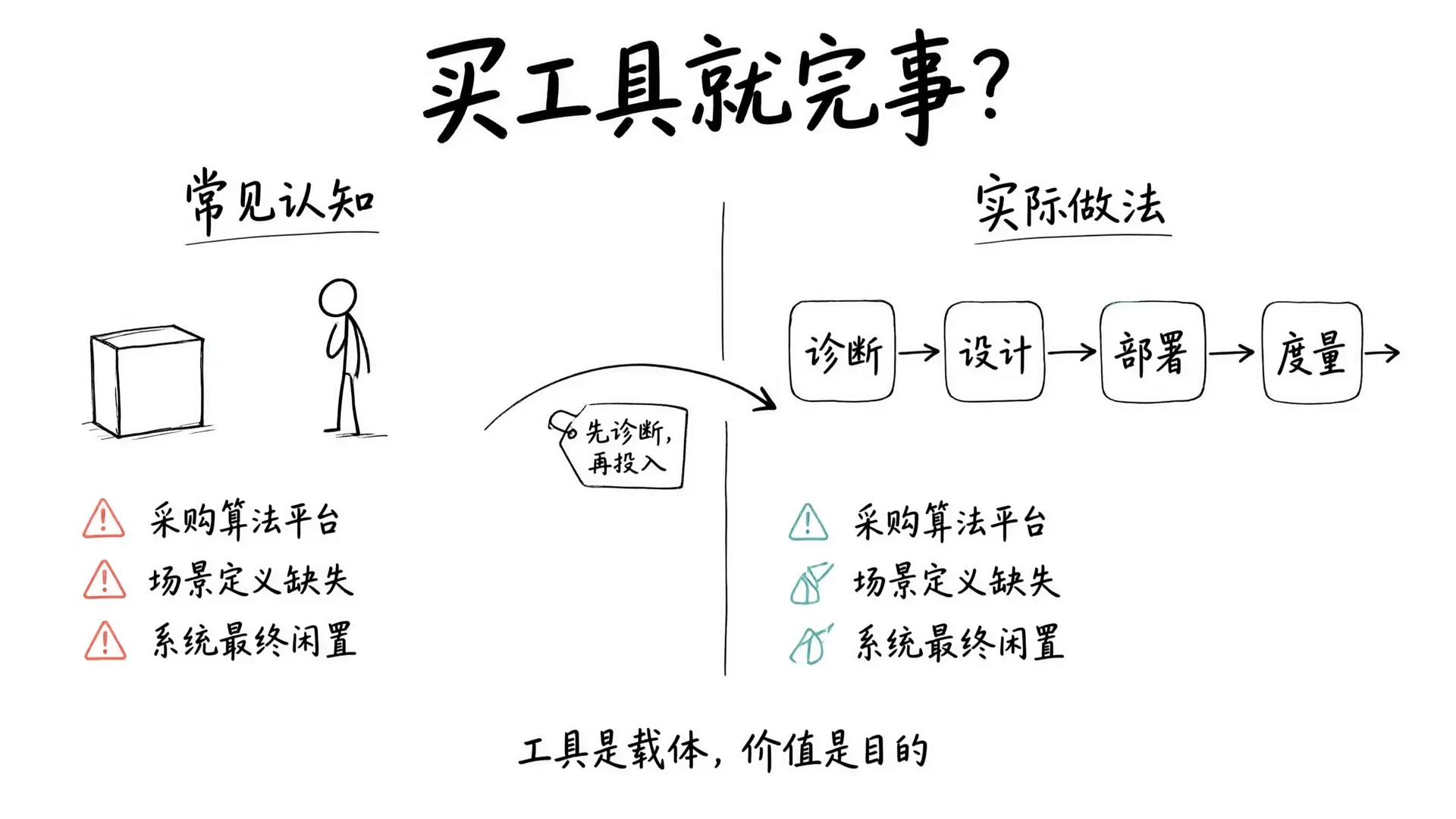
Misconception 3: Digital transformation means simply purchasing an AI tool.
Tools are just the vehicle; methodology and data drive the transformation. We've seen many companies buy algorithm platforms but end up with idle systems due to unclear scenario definitions and metrics. Guanyi Intelligent takes a different approach: we start with a diagnostic review to map business processes, identify bottlenecks, and validate data readiness before moving to design. Measurement is equally critical—each scenario must define verifiable KPIs, such as reductions in labor costs or increases in equipment utilization. Without clear metrics, technical investments rarely translate into tangible business value.
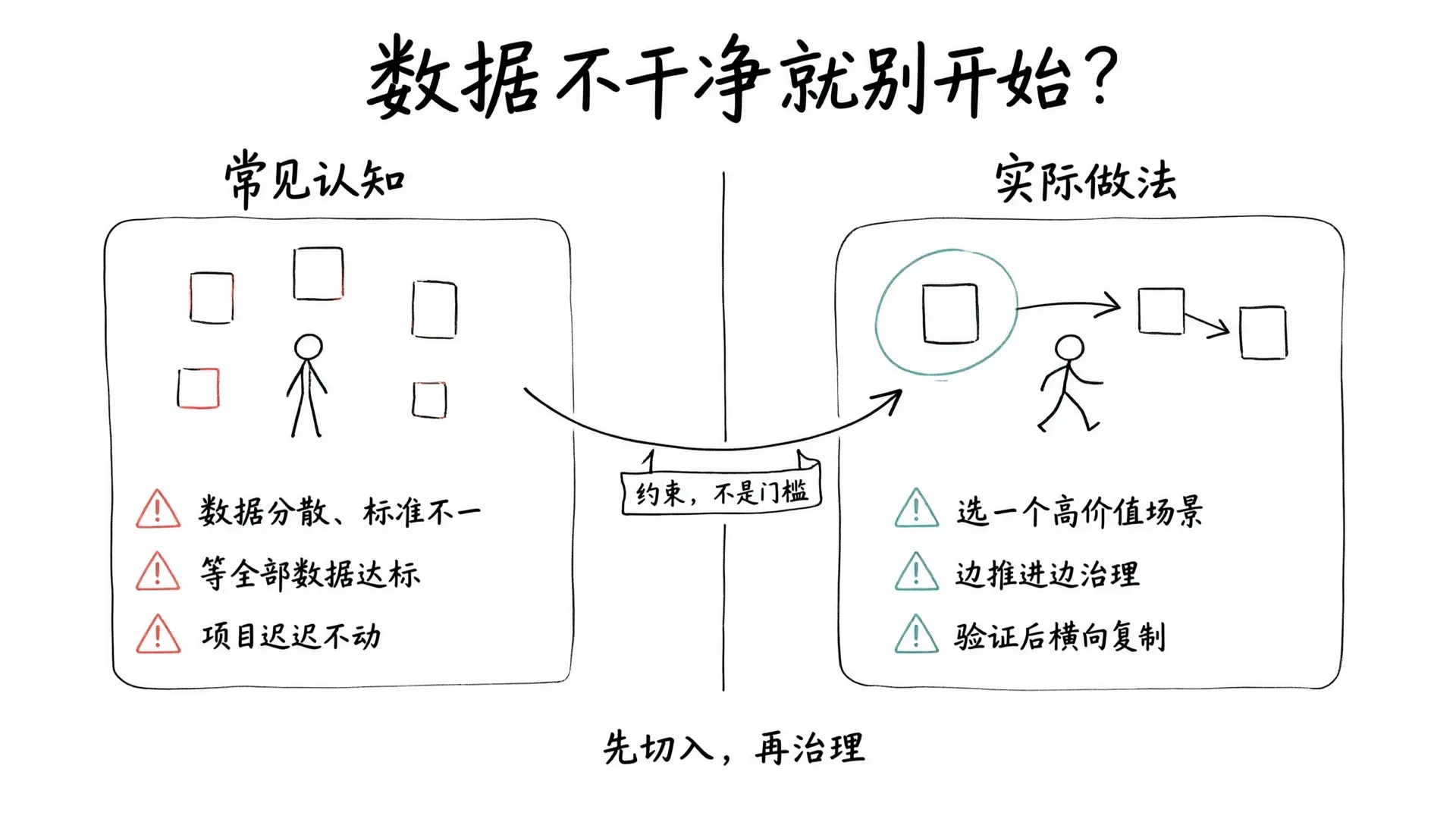
Myth 4: You can't start without clean, large-scale data.
Data quality is a constraint, not a prerequisite. In reality, most enterprises face fragmented data and inconsistent standards—exactly what the diagnostic phase should address. The practical approach is to start with a scenario where data is relatively complete and value is clear, advancing while simultaneously conducting data governance. There's no need to wait until all data meets standards before beginning. Similarly, for small and medium-sized manufacturing enterprises, single-point scenarios often deliver quick wins; validate first, then scale horizontally. Our team holds 32 software copyrights and 5 AI algorithm patents, with core members averaging over 15 years of industry experience. These capabilities enable us to identify actionable entry points even when data is imperfect.
Conclusion
The biggest challenge in AI transformation rarely lies in the algorithms themselves, but in misjudging how to approach the transition. Four key lessons from our real-world enterprise projects: don't aim for full replacement, don't demand perfect PoCs, don't treat tools as the end goal, and don't wait for all data to be ready. Transformation is a continuous process of creating business value through digital means, with clear stages and verifiable outcomes.
Related Solutions
Enterprise AI Transformation + FDE Advisory Coaching
Provides end-to-end AI-driven digital transformation top-level planning and full-cycle implementation support for enterprises.
When SRM Meets AI Agents: Supply Chain Management is Evolving
Has your enterprise implemented SRM? Where are you stuck—data, rules, or organization?
AI Agents in the Workshop: A MOM Manufacturing Operations Solution Built on WorkBuddy
AI Agent + MOM: Bridging the Gap from "Chatting" to "Getting Things Done" with a Robust Foundation.